
Introduction
Quantitative Polymerase Chain Reaction (qPCR) — also known as real-time PCR — is a widely used technique in molecular biology, biotechnology, diagnostics, and environmental testing. qPCR allows for the quantification of nucleic acids (such as DNA or RNA) in real-time by measuring the fluorescence emitted during amplification cycles. The ability to perform quantitative assessments of gene expression, pathogen detection, and various biomarker analyses has made qPCR an indispensable tool across multiple fields, from neuroscience to genomics and health diagnostics.
Unlike traditional PCR, qPCR incorporates a fluorescent signal that is detected at each amplification cycle, providing real-time data about the quantity of nucleic acid present in a sample. This technique offers high sensitivity, dynamic range, and accuracy for measuring DNA or RNA, allowing researchers and clinicians to analyze gene expression or detect low-abundance genetic material (e.g., viral load detection in diagnostics) (NCBI, NIH).

The Role of qPCR Master Mix in Real-Time PCR
A qPCR Master Mix is a pre‑formulated solution containing most of the reagents needed for the qPCR reaction, with the exception of the target DNA, primers, and possibly some additional additives. Master mixes significantly streamline the qPCR process by reducing the number of steps required for preparation, thus lowering the potential for errors and inconsistencies.
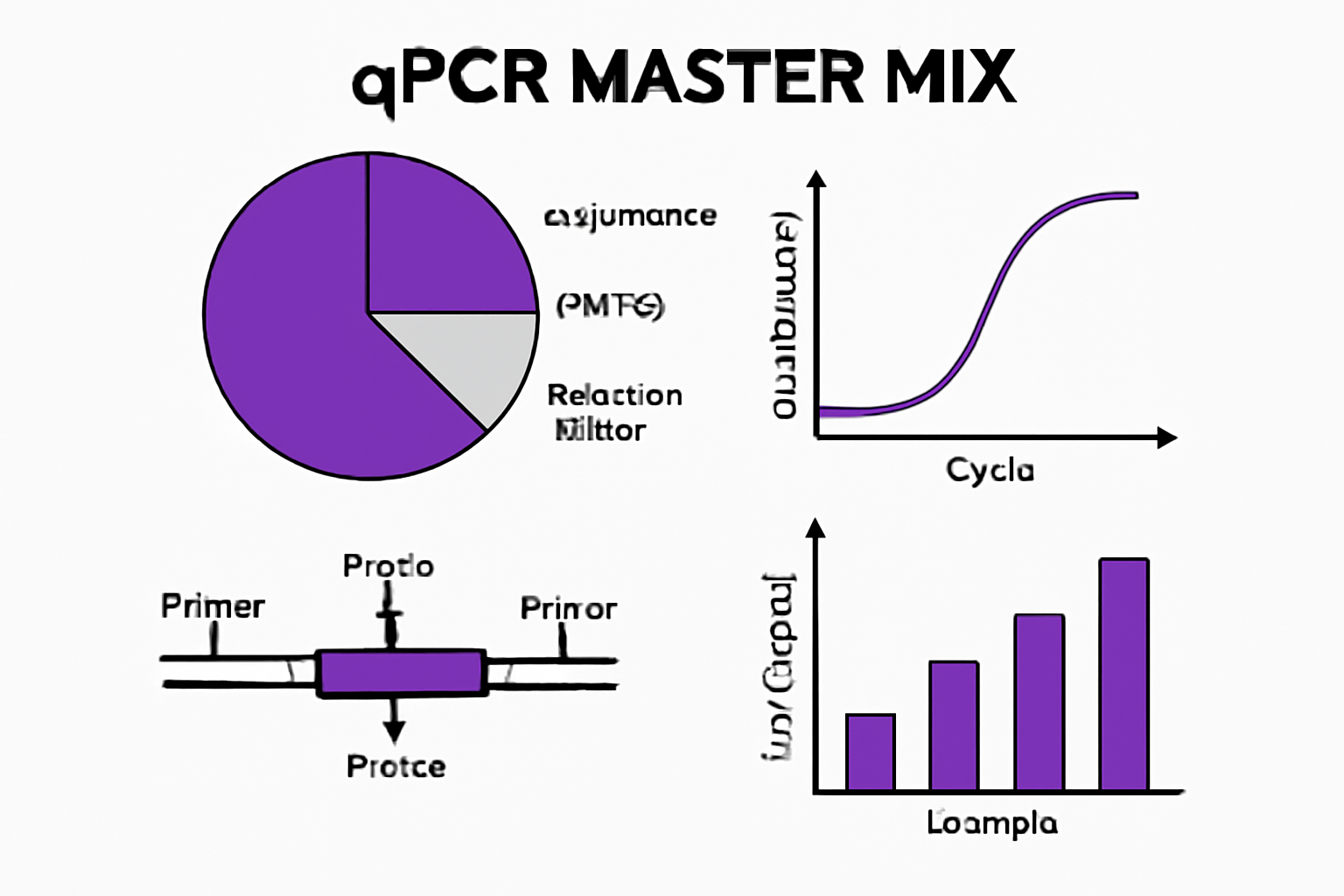
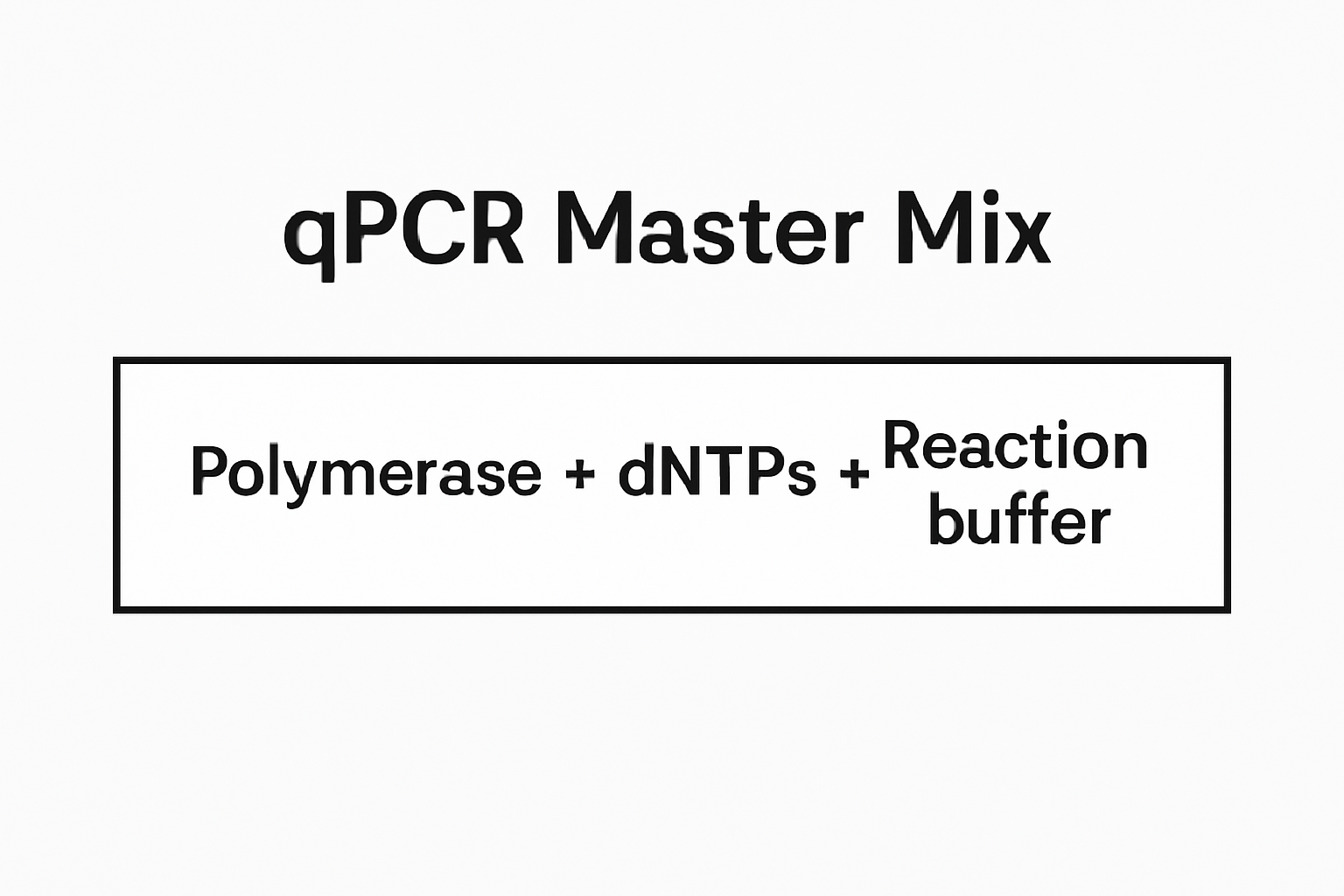
Typically, a qPCR master mix includes:
-
DNA Polymerase: A thermostable enzyme (usually Taq polymerase) that catalyzes the amplification of DNA. Hot-start enzymes, which are activated at elevated temperatures, are commonly included to prevent non-specific amplification during reaction setup (ThermoFisher, Promega).
-
dNTPs: Deoxynucleotide triphosphates (dATP, dCTP, dGTP, dTTP) are the building blocks for synthesizing the amplified DNA strand (Sigma-Aldrich).
-
Magnesium Ions (Mg²⁺): Mg²⁺ is crucial for the DNA polymerase to function efficiently. The concentration of magnesium chloride (MgCl₂) in the buffer is carefully optimized in each master mix to ensure high amplification efficiency (NCBI).
-
Buffering Agents: These provide a stable pH environment for the reaction, ensuring optimal enzyme activity during thermal cycling. Some master mixes contain specialized buffers that enhance enzyme performance under challenging conditions, such as high GC content in templates (ThermoFisher).
-
Fluorescent Dyes or Probes: For qPCR, master mixes often include a fluorescent dye (e.g., SYBR Green) or are compatible with probe-based detection methods (e.g., TaqMan probes). These fluorophores allow for monitoring the amplification of the target DNA in real time (BioTechniques).
-
Optional Additives: Some advanced master mixes include stabilizers, enhancers, and inhibitors to support challenging applications, such as multiplexing or high‑fidelity PCR, which is often required for cloning and sequencing.
The key benefit of using a qPCR master mix is that it provides all these components in a pre-mixed format, making reaction setup faster, more reliable, and more consistent.
Advantages of Using a qPCR Master Mix
Consistency and Reproducibility
Master mixes ensure that every reaction in the experiment receives identical concentrations of reagents. This standardization minimizes inter‑sample variability, leading to more reliable and reproducible results. Consistent reagent concentrations are especially important when working with high-throughput multi-sample assays and for comparing the expression levels of genes in different biological samples.
For laboratories dealing with large-scale qPCR experiments, the uniformity provided by master mixes reduces the potential for errors due to pipetting discrepancies or differences in reagent quality (PubMed).
Increased Throughput and Time Efficiency
Using a qPCR master mix simplifies the preparation of qPCR reactions, significantly saving time in high-throughput settings. Since the reagents are pre-aliquoted, researchers can focus on adding the template and primers to each reaction, reducing the total setup time and improving workflow efficiency. This is critical when processing a large number of samples (e.g., 96-well or 384-well plates) in genomic studies or diagnostics (Promega).
Minimization of Contamination Risks
By minimizing the number of pipetting steps, master mixes lower the likelihood of contamination. Contamination can lead to false positives or unreliable data, especially when working with clinical samples or pathogen detection assays. The fewer the steps in reaction preparation, the less the chance of introducing contaminating nucleic acids, reagents, or other contaminants (Nature Reviews).
Compatibility with Specialized Assays
Many master mixes are formulated to support specific experimental needs. For example, certain mixes are optimized for multiplex PCR (which allows for the amplification of multiple targets in the same reaction), or for high‑fidelity PCR, which ensures accurate amplification with minimal errors. Additionally, mixes may be designed for hot-start PCR or inhibitor-resistant PCR, enhancing the robustness of the reactions (ThermoFisher).
Economic Advantages and Reduced Reagent Waste
Using a master mix allows for bulk preparation of reagents, reducing reagent waste, and offering economic benefits to researchers. For labs that perform a large number of reactions, buying premixed reagents in bulk often turns out to be more cost-effective compared to assembling individual reagents for each reaction.
Factors to Consider When Choosing a qPCR Master Mix
Specificity vs Sensitivity
Different qPCR master mixes come with varying levels of sensitivity and specificity, and the choice depends on the experimental requirements. For example, SYBR Green-based mixes offer a broad detection range, while probe-based master mixes (such as those using TaqMan probes) offer higher specificity, as they target specific sequences.
-
SYBR Green: Measures DNA binding, useful for gene expression profiling.
-
Probe-based Detection: Ideal for assays requiring greater specificity, such as pathogen detection, where amplification of non-target DNA is undesirable (BioTechniques).
Master Mix for Multiplex PCR
When multiple targets are amplified simultaneously in a single qPCR reaction (multiplexing), the choice of master mix becomes even more critical. The mix must ensure that the primers for each target are balanced in terms of amplification efficiency, and that the fluorophores do not interfere with each other. Multiplex assays are commonly used in pathogen detection and genetic screening, where several targets must be analyzed in a single reaction (BioTechniques).
Storage and Stability of Master Mix
Most qPCR master mixes are stable when stored at –20°C, but repeated freeze-thaw cycles can damage the reagents, especially enzymes. To prevent degradation, it is advisable to aliquot master mixes into smaller volumes, ensuring that each aliquot is only thawed once.
Moreover, master mixes often come with stability claims, ensuring that enzymes retain activity and that the mix provides consistent results after long periods of storage. Some mixes are also inhibitor-resistant, which is crucial when working with biological samples that may contain inhibitors (e.g., blood, soil, or urine samples) (ThermoFisher).
High‑Fidelity and High‑Throughput
For applications that require high-fidelity amplification — such as cloning or next-generation sequencing (NGS) preparation — it’s essential to choose master mixes that use high-fidelity enzymes. These polymerases have improved proofreading capabilities, ensuring minimal errors in amplification.
For high‑throughput studies, it is vital to ensure that the chosen master mix is compatible with multi-well plates, such as 96-well or 384-well formats. High-throughput qPCR assays are frequently used in genomic studies and drug screening (Promega).
Best Practices for Using qPCR Master Mix
Primer Design
Even with the best master mix, poor primer design can lead to inefficient amplification. Ensure primers are designed to work optimally under the conditions provided by the master mix. Using online tools for primer design, such as Primer3 (NCBI Primer), can help you create primers that will amplify your target sequences with high efficiency.
Reaction Setup
-
Ensure correct primer concentration: Too high or too low primer concentration can affect PCR efficiency.
-
Use no-template controls (NTC) to check for contamination.
-
Always perform replicates to ensure statistical significance.
Quality Control
Run standard curves and efficiency tests to ensure that the PCR is operating within the desired parameters. Regularly perform melt curve analysis to detect non-specific amplification products (such as primer-dimers), especially when using SYBR Green detection.
Conclusion
qPCR master mixes are fundamental tools for anyone working in molecular biology and related fields. They streamline the setup process, reduce variability, and improve the reproducibility of results. With the wide range of options available, from hot-start to high-fidelity, and multiplexing capabilities, qPCR master mixes offer a solution tailored to a wide variety of applications in diagnostics, gene expression studies, and pathogen detection.
By choosing the right qPCR master mix and following best practices, researchers can optimize amplification, minimize contamination, and ensure high-quality data across a wide range of biological samples.