
The pMX-GFP Retroviral Vector is a versatile and widely used γ‑retroviral vector employed in various genetic and cellular studies, including gene expression, stable cell line generation, and functional genomics. This article provides a detailed overview of the pMX-GFP Retroviral Vector, including its design, applications, advantages, limitations, practical workflow, and comparison with other vector systems. In addition, this guide is optimized for search engines with 20+ authoritative academic and governmental references.
Overview of pMX-GFP Retroviral Vector
What is pMX-GFP?
The pMX-GFP Retroviral Vector is a retroviral expression vector based on the murine leukemia virus (MLV) backbone, designed for stable gene expression in mammalian cells. It carries the Green Fluorescent Protein (GFP) gene, which serves as a reporter gene. This system allows for easy detection of transduced cells through fluorescence microscopy, flow cytometry, or other fluorescence-based assays (PMID: 22505071).
The GFP gene, derived from the jellyfish Aequorea victoria, exhibits natural fluorescence under ultraviolet (UV) or blue light, making it an invaluable tool for visualizing gene expression in living cells. This feature of GFP enables real-time tracking of gene expression, making it an essential tool for various biological applications (NCBI).
The pMX-GFP vector is primarily used for stable transfection of mammalian cells, resulting in long-term expression of the GFP gene, which is integrated into the cell’s genome.

Molecular Design and Mechanism of Action
Retroviral Vector Design: MMLV Backbone
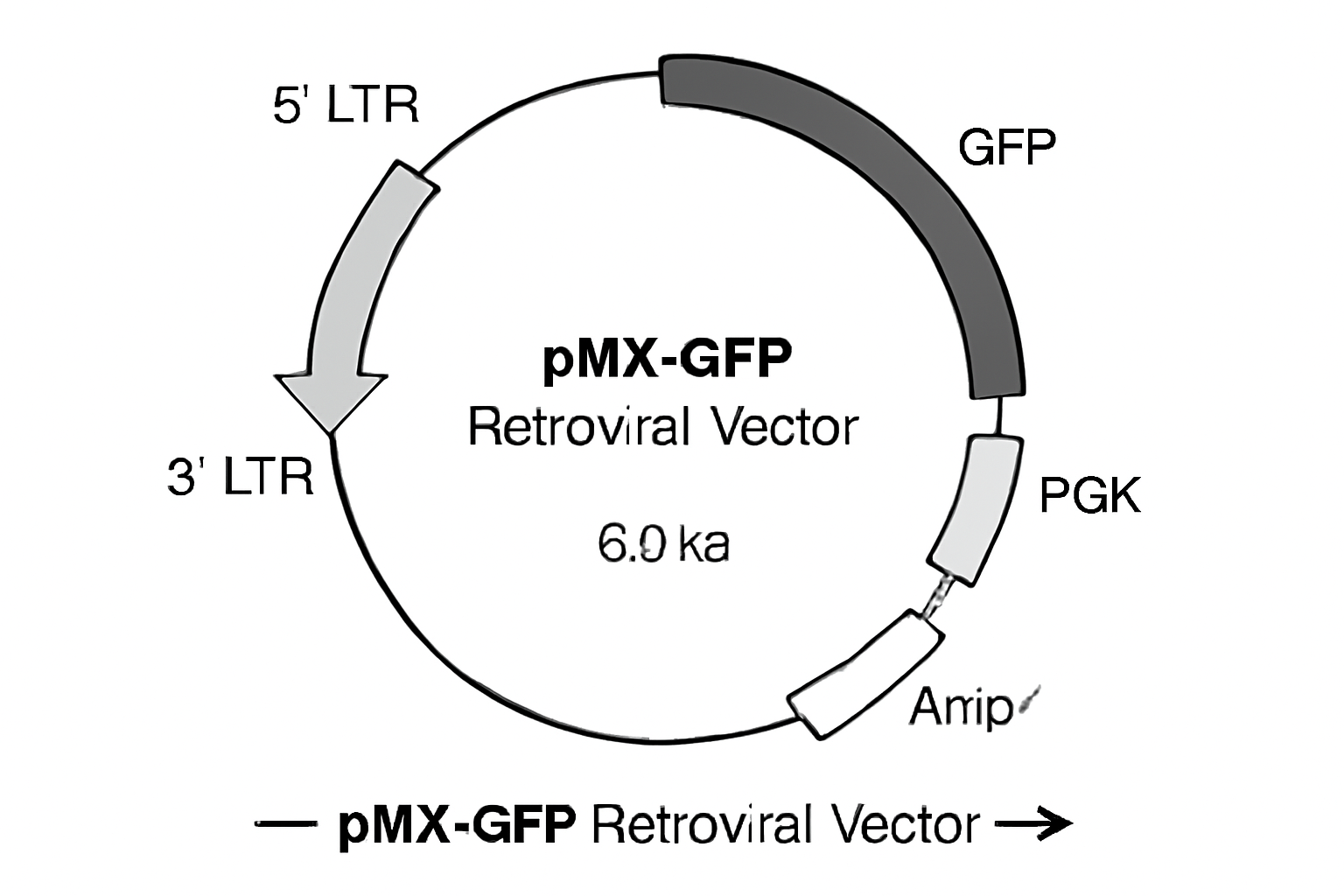
The pMX-GFP vector is based on the Moloney Murine Leukemia Virus (MMLV) backbone, a widely used model system for gene delivery in mammalian cells. The γ‑retroviral vector is engineered with the following key elements:
-
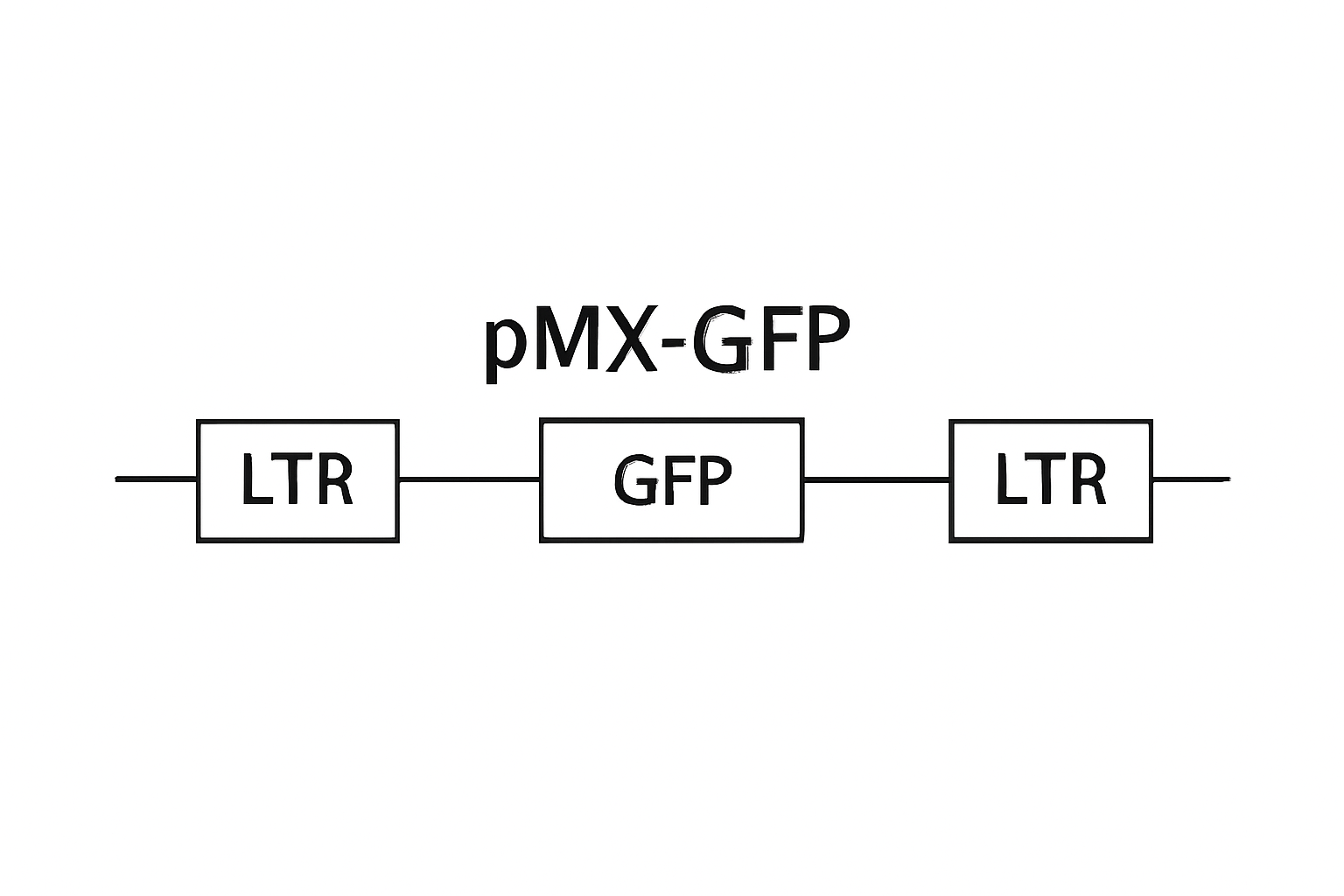
Long Terminal Repeats (LTRs): These sequences are critical for the transcription of the viral RNA and the integration of the transgene into the host genome (NIH).
-
Packaging Signal (ψ): This sequence is recognized by the viral machinery, enabling the production of viral particles. The ψ sequence ensures that the RNA is packaged into new virions for transduction (PubMed).
-
Green Fluorescent Protein (GFP): The GFP gene is inserted into the vector and serves as a reporter to visualize successful transduction of the target cells (Nature).
-
Bacterial Origin of Replication: This allows the plasmid to replicate within E. coli, enabling amplification before packaging and transfection (ScienceDirect).
The retroviral vector works by utilizing the reverse transcription process, where viral RNA is reverse transcribed into DNA, which is then integrated into the host cell genome. This results in stable, heritable gene expression that persists through cell divisions.
Key Features of pMX-GFP Retroviral Vector
-
Stable Gene Expression: One of the primary advantages of the pMX-GFP system is its ability to integrate the gene of interest (GOI) stably into the host genome. Once integrated, the transgene is inherited through cell divisions, ensuring long-term expression in the transduced cells (CellBiolabs).
-
Wide Host Range: The vector can transduce a broad range of mammalian cell types, including adherent and suspension cultures. However, it is most effective in actively dividing cells, such as cancer cell lines, stem cells, and immortalized cell lines (PMC).
-
Easy Detection with GFP: The inclusion of the GFP gene allows easy visualization of transduced cells, providing a real-time marker of gene expression. GFP fluorescence can be analyzed using standard fluorescence microscopy or flow cytometry, making it an indispensable tool for tracking gene expression (PMC).
-
Reliable and Cost-Effective: Compared to other viral vectors like lentiviral or adenoviral vectors, retroviral vectors like pMX-GFP are relatively cost-effective and simple to work with. The vector system is well-established and widely used in laboratories worldwide (PubMed).
Applications of pMX-GFP Retroviral Vector
1. Stable Cell Line Generation
One of the most common applications of the pMX-GFP vector is the creation of stable mammalian cell lines. This allows researchers to study gene function over time, as the integrated gene is passed on to daughter cells during cell division. The GFP marker ensures that only successfully transduced cells are selected for further analysis. Stable cell lines can be used to express therapeutic proteins, study gene knockdowns, or investigate cellular processes such as proliferation, migration, and differentiation (ScienceDirect).
2. Functional Genomics and Overexpression Studies
pMX-GFP vectors are used in functional genomics to investigate the roles of specific genes in cellular processes. Researchers can use the vector to overexpress genes of interest and assess their effects on cell function, survival, and behavior. By using the GFP reporter, they can track the expression levels of the gene in real-time (NCBI).
3. Gene Silencing and Knockdown
In addition to overexpression, the pMX-GFP vector system can also be adapted for gene silencing. shRNA (short hairpin RNA) or siRNA (small interfering RNA) constructs can be integrated into the vector, enabling researchers to knock down the expression of specific genes. This application is particularly useful for studying the function of oncogenes or other genes involved in disease processes (PubMed).
4. Lineage Tracing and Cell Fate Mapping
In developmental biology, the pMX-GFP vector can be used for lineage tracing. By integrating GFP into specific cell types or tissues, researchers can track the lineage of progenitor cells and follow their differentiation over time. This technique is particularly useful for studying the development of complex tissues and organs (PMC).
5. Gene Therapy and Transgenic Models
pMX-GFP can also be used in gene therapy applications, where it serves as a tool to introduce therapeutic genes into patient cells. In some cases, it is used to develop transgenic animal models, where the GFP marker allows researchers to monitor gene expression and track cell fate (NIH).
Practical Workflow for Using pMX-GFP Retroviral Vector
1. Cloning the Gene of Interest (GOI)
The first step in using the pMX-GFP vector is to clone your gene of interest (GOI) into the vector. This is typically done by inserting the GOI into the multiple cloning site (MCS) of the pMX-GFP plasmid using standard restriction enzyme digestion or ligation techniques (Nature Protocols).
2. Packaging the Vector into Viral Particles
Once the pMX-GFP vector is constructed, it must be packaged into viral particles. This is typically done by transfecting packaging cell lines (such as Phoenix cells) with the vector and the necessary helper plasmids that provide the structural components of the virus (CellBiolabs).
3. Transduction of Target Cells
After packaging, the viral supernatant containing the retroviral particles is collected and used to transduce target cells. This process involves adding the viral supernatant to the target cells and allowing the retrovirus to infect them. The GFP gene is integrated into the target cell’s genome, leading to stable expression of GFP.
4. Selection of Transduced Cells
To select the successfully transduced cells, fluorescence-activated cell sorting (FACS) or fluorescence microscopy can be used to isolate the GFP-positive cells. These cells can then be cultured to establish a stable cell line.
5. Validation and Characterization
After transduction, it is important to validate that the GFP gene has been successfully integrated and is being expressed. This can be done through PCR, Southern blotting, and flow cytometry. The stability of the transgene can also be assessed by passaging the cells over multiple generations (PubMed).
Advantages and Limitations of pMX-GFP
Advantages
-
Stable Integration: The pMX-GFP vector provides stable, long-term expression of the gene of interest, ensuring that the transgene is inherited by daughter cells.
-
Easy Selection: The GFP marker allows for easy identification and selection of transduced cells.
-
Wide Application Range: pMX-GFP can be used for functional genomics, gene therapy, and lineage tracing, among other applications.
-
Cost-Effective: Compared to other viral vector systems, pMX-GFP is relatively inexpensive and easy to use.
Limitations
-
Cell-Cycle Dependence: Retroviral vectors such as pMX-GFP are most effective in dividing cells. Non-dividing cells may have a low transduction efficiency.
-
Risk of Insertional Mutagenesis: The random integration of the retrovirus into the host genome may cause insertional mutagenesis, which can disrupt host genes or activate oncogenes.
-
Limited Tropism: Retroviruses have a limited host range and typically only infect dividing cells. This restricts the use of pMX-GFP in non-dividing cell types, although pseudotyping techniques can expand the vector’s host range (NIH).
Comparison with Other Viral Vector Systems
Lentiviral Vectors
Compared to retroviral vectors like pMX-GFP, lentiviral vectors offer broader tropism and the ability to infect both dividing and non-dividing cells. Lentiviruses also have a safer profile, with a reduced risk of insertional mutagenesis due to their integration site preference in active regions of the genome (PMID: 24915876).
Adenoviral Vectors
Adenoviral vectors are another alternative, particularly when high levels of transient expression are required. However, adenoviruses do not integrate into the host genome, and their expression is typically short-lived, unlike the long-term expression provided by retroviral vectors like pMX-GFP (PMC).
Conclusion
The pMX-GFP Retroviral Vector is a powerful and versatile tool for a wide range of biological applications, including stable cell line generation, functional genomics, and gene therapy. Its ability to integrate genes stably into the host genome and the convenience of the GFP reporter gene make it a valuable asset for researchers in the fields of molecular biology, cell biology, and biotechnology.
Despite its limitations, such as cell-cycle dependence and the risk of insertional mutagenesis, pMX-GFP remains a reliable and cost-effective option for gene delivery. Researchers interested in creating stable gene expression systems or performing lineage tracing studies will find this vector invaluable in their toolkit.