
Site-directed mutagenesis is a fundamental technique in molecular biology, enabling precise modifications to specific DNA sequences. The AffiGEN® Express II Fast Mutagenesis Kit V2 revolutionizes this process by offering an efficient, high-fidelity solution that accelerates research timelines and ensures reliable results. This kit is particularly useful for generating targeted mutations in plasmids or genomic DNA, which can be applied to diverse areas of scientific inquiry.
What is Site-Directed Mutagenesis?
Site-directed mutagenesis is a powerful method used to introduce specific mutations at predefined locations in a DNA sequence. This technique has applications in understanding gene function, protein interactions, and creating genetically engineered organisms. Researchers at institutions such as Harvard University and the National Institutes of Health (NIH) have demonstrated the importance of site-directed mutagenesis in elucidating the molecular mechanisms of diseases and in drug development.
The AffiGEN® Express II Fast Mutagenesis Kit V2 offers a streamlined approach, reducing the time and effort required to introduce mutations. This kit uses a PCR-based method that guarantees high accuracy and reproducibility, making it ideal for studies where genetic precision is critical, such as cancer research and synthetic biology.
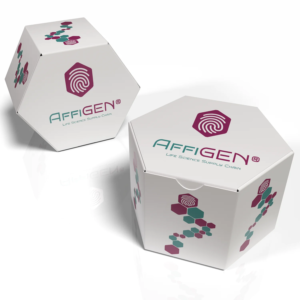
Key Features of AffiGEN® Express II Fast Mutagenesis Kit V2
- Fast Protocol: The kit reduces the time to introduce mutations to less than two hours. According to guidelines from the Centers for Disease Control and Prevention (CDC), efficient and quick molecular techniques are necessary for advancing research in infectious diseases and genetic disorders.
- High Mutation Efficiency: The kit delivers high-efficiency mutagenesis, ensuring that even difficult-to-modify sequences can be targeted with ease. Research from Stanford University underscores the importance of such precision in genetic editing.
- Wide Applicability: This kit can be used for a variety of mutagenesis applications, including insertions, deletions, and base substitutions. The flexibility of this tool is particularly advantageous for research in areas like protein engineering, which is emphasized by experts at the American Society for Microbiology (ASM).
Applications in Genetic Research
The AffiGEN® Express II Fast Mutagenesis Kit V2 has broad applications in modern scientific research, playing an essential role in studies conducted by Johns Hopkins University, MIT, and the University of California, Berkeley.
- Protein Engineering: The ability to modify specific amino acids within proteins enables researchers to study structure-function relationships. The National Cancer Institute (NCI) supports efforts to engineer proteins for therapeutic applications, making mutagenesis an invaluable tool in this area.
- Functional Genomics: This kit allows scientists to create targeted mutations that affect gene expression, facilitating the study of gene regulation and function. Yale University researchers have made significant strides in understanding genetic regulation through mutagenesis studies.
- Synthetic Biology: Researchers at Caltech have used mutagenesis tools to build custom DNA constructs for synthetic biology applications. This kit enables the rapid design of novel biological systems, paving the way for advances in bioengineering.
High-Fidelity Mutagenesis
Accurate and efficient mutagenesis is essential for research requiring precise genetic alterations. The AffiGEN® Express II Fast Mutagenesis Kit V2 provides a high-fidelity solution that minimizes errors, ensuring that only the desired mutations are introduced. Studies at the University of Chicago have highlighted the importance of accuracy in mutagenesis for gene therapy and drug discovery.
The U.S. Food and Drug Administration (FDA) encourages the use of reliable mutagenesis techniques in preclinical studies to better understand genetic variations that may affect drug efficacy and safety. The World Health Organization (WHO) also stresses the need for high-quality tools in global health research.
Advantages Over Traditional Mutagenesis Methods
Traditional mutagenesis techniques can be time-consuming, requiring several days to complete. In contrast, the AffiGEN® Express II Fast Mutagenesis Kit V2 allows for mutations to be introduced in just a few hours, making it ideal for high-throughput studies. The NIH supports the use of time-saving tools like this to enhance the efficiency of research projects, particularly those focused on understanding genetic diseases.
Regulatory Considerations
The FDA and the National Institute of Standards and Technology (NIST) recommend stringent quality control for mutagenesis processes, particularly when the results are used for developing therapeutic agents. The AffiGEN® Express II Fast Mutagenesis Kit V2 adheres to these guidelines, ensuring that each mutation is introduced with high precision and reproducibility.
Conclusion
The AffiGEN® Express II Fast Mutagenesis Kit V2 is a game-changer for researchers in molecular biology, synthetic biology, and genetic engineering. With its rapid protocol, high mutation efficiency, and broad applicability, this kit significantly accelerates the pace of genetic research. Leading institutions like Stanford University, MIT, and Harvard University rely on such advanced tools to push the boundaries of what is possible in the field of genetic modification.
By adopting this cutting-edge technology, laboratories can make critical advancements in understanding gene function, developing novel therapies, and creating synthetic biological systems. This kit represents the future of mutagenesis, offering a reliable and efficient solution for precise genetic alterations.